

Planned Preventative Maintenance vs Reactive Repair: The True Cost for Commercial Kitchens
Planned Preventative Maintenance vs Reactive Repair: The True Cost for Commercial Kitchens
When it comes to commercial kitchen equipment maintenance, most operators fall into one of two camps: those who have a planned preventative maintenance (PPM) contract in place, and those who call an engineer only when something breaks. Both approaches have costs — but the true cost of reactive-only maintenance is almost always significantly higher than operators realise.
This analysis looks at the real financial comparison between PPM and reactive repair for commercial kitchen operators — and why the shift to planned maintenance almost always delivers a better return.
What Is Planned Preventative Maintenance?
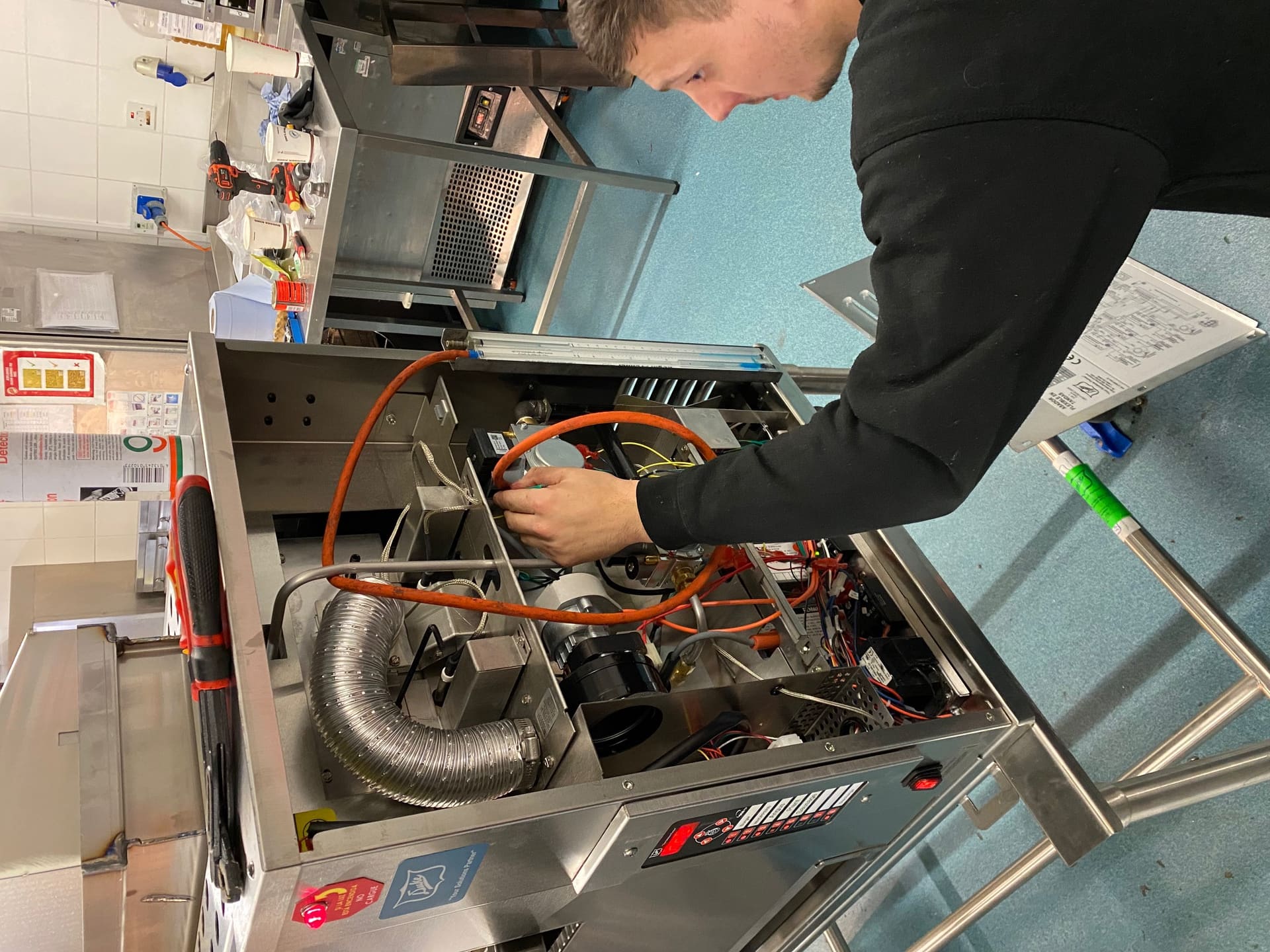
A planned preventative maintenance (PPM) contract is a scheduled programme of regular servicing visits for your commercial catering equipment. A PPM contract typically includes:
- Regular inspection and servicing of all covered equipment
- Cleaning and calibration of key components
- Identification and replacement of wearing parts before they fail
- Annual gas safety inspection (CP42) and EICR electrical testing where included
- A service report after each visit
- A documented process for reporting breakdowns between scheduled visits
The Hidden Costs of Reactive Maintenance
On the surface, paying only when something breaks seems cost-effective. In practice, reactive maintenance carries a range of hidden costs that rarely appear in the initial callout invoice:
1. Emergency Call-Out Premiums
Emergency call-outs — particularly outside business hours — command significant premiums over standard service rates. An out-of-hours emergency call-out can cost two to three times the equivalent planned visit rate, before any parts or labour for the repair itself.
2. Downtime and Lost Revenue
For a QSR operator, an oven or fryer failure during a busy lunch or dinner service can mean hundreds or thousands of pounds of lost revenue per hour. Even for smaller operations, an equipment failure that closes the kitchen for a day represents a substantial loss that no repair invoice reflects.
3. Cascade Failures
Equipment that is not regularly serviced tends to fail suddenly and completely rather than showing gradual warning signs. A worn component that would have been caught and replaced during a routine service visit can, if left unaddressed, cause secondary failures in adjacent components — turning a £200 parts replacement into a £1,500 repair.
4. Shortened Equipment Life
Commercial catering equipment that is regularly serviced will typically last 30–50% longer than equipment maintained reactively. The replacement cost of a commercial combi oven, fryer, or dishwasher represents a significant capital expense — extending equipment life through planned maintenance delivers real financial value.
5. Compliance Failures
Reactive maintenance often means compliance slips. Gas safety certificates (CP42) and EICR electrical inspection certificates expire, and in the rush of day-to-day operations, renewals get missed. The consequences — insurance invalidation, HSE enforcement, or prosecution — carry costs that dwarf any maintenance savings.
The Financial Case for PPM
When you account for the true costs of reactive maintenance — emergency premiums, downtime, cascade failures, shortened equipment life, and compliance exposure — PPM contracts almost always represent the lower-cost option over a three to five year horizon.
A well-structured PPM contract for a mid-sized commercial kitchen covering four to six key appliances typically costs between £2,000 and £5,000 per year depending on the equipment mix and service frequency. A single serious breakdown — a failed combi oven heating element causing a cascade fault, or a fryer gas valve failure requiring an emergency weekend callout — can easily cost £1,500 to £3,000 in parts and labour alone, before accounting for any lost revenue.
What a Good PPM Contract Should Include
Not all PPM contracts are equal. When evaluating a maintenance contract for your commercial kitchen, look for:
- Clear scope — which specific appliances are covered, and what is included in each visit
- Defined visit frequency — quarterly visits for high-use equipment, bi-annual for lower-use appliances
- Compliance coverage — annual CP42 gas safety inspection and EICR electrical testing should be included or clearly priced
- Breakdown arrangements — how requests are assessed, prioritised, and scheduled between planned visits
- Parts and labour clarity — whether wear parts are included or charged additionally
- Service reports — written documentation of each visit for your compliance records
Multi-Site PPM for QSR Chains and Hotel Groups
For operators running multiple locations — whether a QSR franchise, a hotel group, or a motorway services operator — a national PPM contract with a single engineering partner delivers additional advantages beyond cost:
- Consistent service standards across all sites
- Centralised compliance documentation
- A single point of contact for all maintenance and emergency needs
- Volume pricing that reduces per-site costs
- Engineers who become familiar with your specific equipment configuration
Talk to HK Engineering About a PPM Contract
HK Engineering provides planned preventative maintenance contracts for commercial kitchens across England and Wales. We cover all major equipment brands including Unox, Rational, Welbilt, Meiko, Duke, and Nieco, and our Gas Safe and NICEIC certified engineers can include annual gas safety and electrical compliance testing within your contract.
Contact our team to discuss a PPM contract tailored to your operation — whether you're a single-site restaurant or a multi-location QSR franchise operator.
Related Articles
How Much Does a CP42 Commercial Gas Safety Certificate Cost in 2026?
Read Article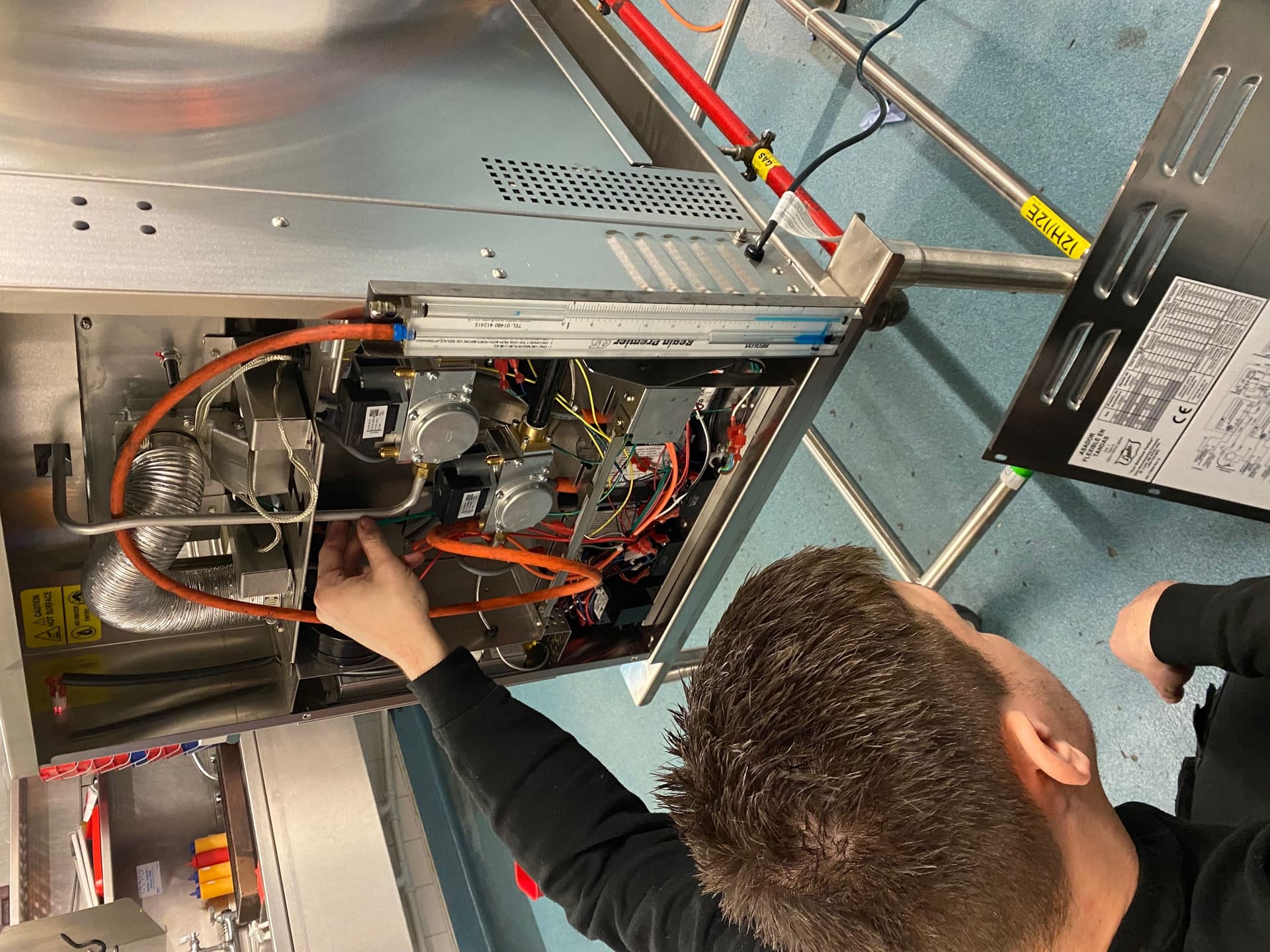
EICR Cost for Commercial Kitchens — 2026 UK Price Guide
Read Article


