

Electrical Safety in Commercial Kitchens: Essential Protocols and Emergency Procedures
Electrical Safety in Commercial Kitchens: Essential Protocols and Emergency Procedures
Commercial kitchens present unique electrical safety challenges due to their combination of high-powered equipment, wet environments, heat-generating appliances, and fast-paced operations. Electrical faults in these settings not only threaten business continuity but can create serious safety hazards including fire risks and potential injury to staff.
As the Electrical Team Manager at HK Engineering, I oversee electrical installations, maintenance protocols, and emergency response systems across England and Wales. My team specialises exclusively in commercial catering electrical systems, and we've developed comprehensive safety procedures based on our extensive experience with the specific demands of food service environments. This guide outlines the essential electrical safety protocols that every commercial kitchen operator should implement.
Electrical Safety Standards for Commercial Kitchens

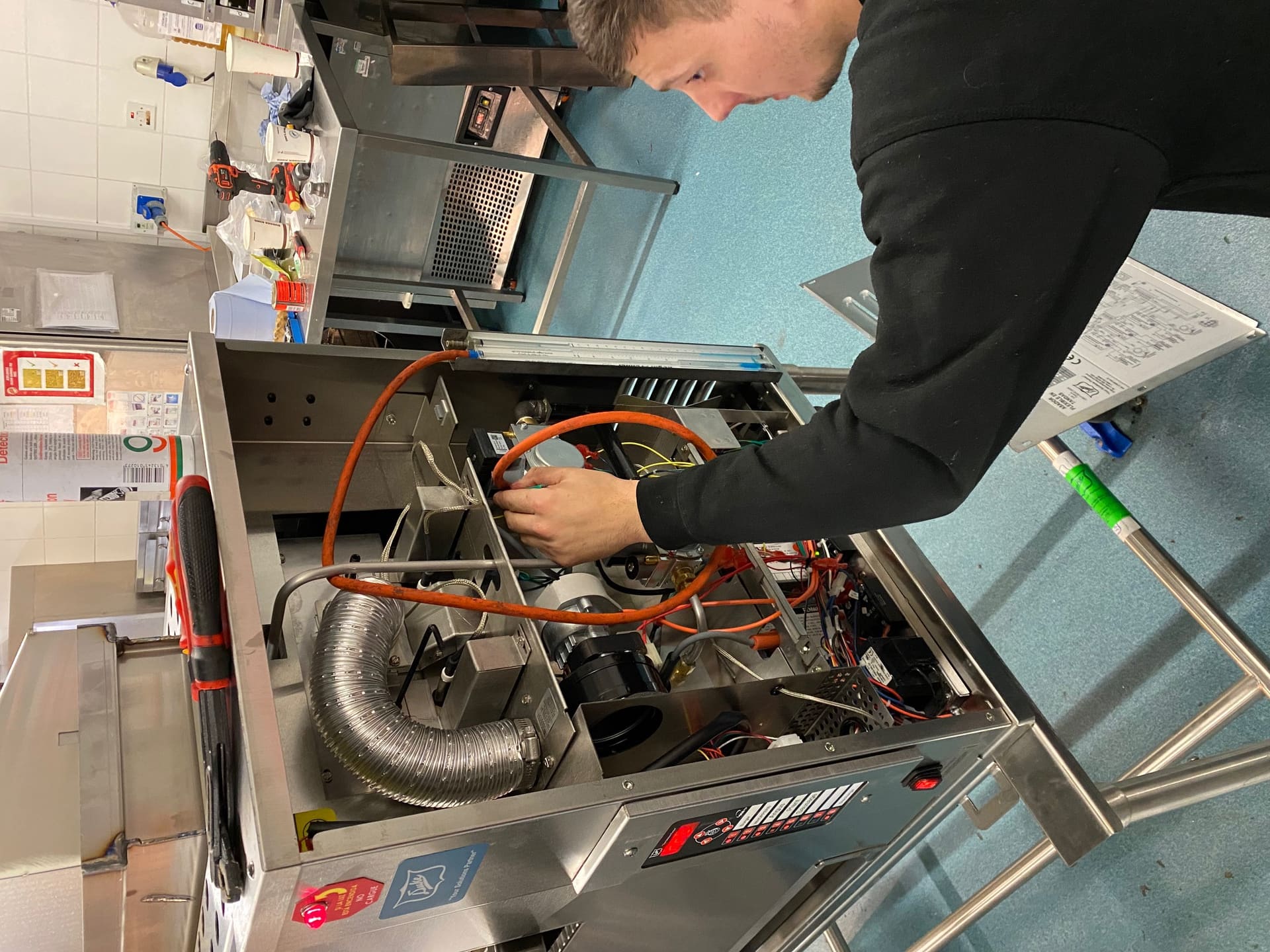
Professional electrical inspection in a commercial kitchen environment, following BS 7671 requirements
Commercial kitchens must comply with specific electrical safety regulations that address their unique operational environment:
1. Regulatory Framework
- BS 7671 (18th Edition Wiring Regulations): The fundamental standard governing all electrical installations
- Electricity at Work Regulations 1989: Legal requirements for maintaining electrical systems
- BS EN 60335-2-50: Specific requirements for commercial electric cooking appliances
- BS EN 60335-1: General requirements for electrical appliances
- IET Code of Practice: Industry guidance for commercial kitchen installations
These regulations are particularly stringent for commercial kitchens due to the combination of high electrical loads, presence of water, heat-generating equipment, and high-traffic operational environment. Our electrical engineering team specialises in ensuring complete compliance with these complex overlapping regulations.
2. Protect Product and Prevent Further Damage
Once immediate safety concerns are addressed:
- For cooking equipment failures: Keep doors closed, monitor temperatures, prepare for food transfer
- For water leaks: Turn off water supply, contain spreading water, protect electrical equipment
- For cooking equipment: Remove food products, allow equipment to cool safely
- For electrical issues: Switch off circuit breakers related to the equipment
When a walk-in cooler fails, for example, keeping doors closed can maintain safe temperatures for 1-2 hours in most cases, buying valuable time to arrange alternatives.
3. Gather Critical Information
Before calling for help, collect information that will speed up the response:
- Equipment details: Make, model, serial number, age (photos of spec plates are helpful)
- Specific symptoms: Unusual sounds, smells, error codes, when the problem started
- Recent changes: Maintenance performed, changes in operation, power outages
- Service history: Recent repairs, recurring issues
- Operational impact: How the failure affects your business (helps the provider assess the request)
Detailed information helps a service provider assess which skills, tools, and parts may be relevant before confirming the available next steps.
Emergency Response Plan: The Next Steps
Once immediate actions are taken, implement these next-phase responses:
1. Contact Professional Service
Calling for professional assistance should happen quickly:
- Contact your regular service provider with the information gathered
- Be clear about the urgency—explain business impact
- Ask for estimated response time
- Inquire if any troubleshooting can be done while waiting
- Request emergency contact if after-hours
At HK Engineering, call 01225 791848 to discuss the fault and available support. Response times and attendance depend on location, engineer availability, equipment, and parts.
2. Implement Contingency Plans
Quick Reference: Contingency Options by Equipment Type
- cooking equipment: Mobile cooking equipment units, ice baths, nearby restaurant storage, wholesale club runs
- Cooking Equipment: Portable equipment, menu modification, outdoor cooking (if permitted), nearby commissary kitchen
- Dishwashing: Disposable serviceware, triple-sink manual washing, nearby facility arrangement
- Water Heating: Portable water heaters, large stock pots for heating water
Every kitchen should have pre-established contingency plans that can be quickly activated:
- Alternative equipment options: Backup equipment, portable units, neighboring businesses
- Menu modifications: Simplified offerings that can be executed with available equipment
- Staff redeployment: Modified duties to accommodate workflow changes
- Customer communication: Transparent explanation of limitations if service is affected
One client we work with maintains agreements with three neighboring restaurants to share cooking equipment space in emergencies—a simple arrangement that has prevented thousands in food losses.
3. Document the Incident
Proper documentation serves multiple purposes:
- Insurance claims: Photos, timestamps, detailed description of events
- Health department compliance: Temperature logs, corrective actions taken
- Warranty claims: Evidence of proper maintenance and operation
- Future prevention: Identifying patterns or contributing factors
Use your phone to take photos and videos showing the equipment, any visible damage, error codes on displays, and when possible, the circumstances around the failure.
Equipment-Specific Emergency Procedures
Different equipment types require specific approaches:
cooking equipment Emergencies
cooking equipment failures are among the most time-sensitive emergencies:
Immediate Actions
- Monitor internal temperatures with a probe thermometer every 30 minutes
- Keep doors closed as much as possible
- Place frozen ice packs inside if available
- Use dry ice for ovens if extended downtime is expected
- Prioritise moving most vulnerable/valuable items first
Food Safety Guidelines
- Food held between 5°C and 60°C for more than 2 hours requires assessment
- Items exceeding 10°C for more than 4 hours may need to be discarded
- Maintain detailed temperature logs for health department purposes
- When in doubt, throw it out—food safety should never be compromised
Cooking Equipment Failures
For ovens, ranges, fryers, and other cooking equipment:
Gas Equipment Safety
- If you smell gas, evacuate immediately and call the gas provider
- Turn off main gas valve if safe to do so
- Never attempt to light equipment after gas-related failures
- Ventilate the space by opening doors and windows
- Only allow properly certified engineers to work on gas equipment
Electrical Cooking Equipment
- Check circuit breakers before assuming equipment failure
- Look for signs of electrical damage (burning smells, discoloration)
- Avoid using equipment showing any signs of electrical issues
- Turn off at the isolation switch or unplug completely
Water-Related Emergencies
For dishwashers, water heaters, or any equipment with water connections:
- Know the location of water shut-off valves for each piece of equipment
- Use water-absorbing mats or barriers to prevent spreading
- Remove standing water quickly to prevent slip hazards and damage
- Protect electrical equipment and outlets from water exposure
- Use moisture meters to check for water intrusion in walls or under equipment
After the Emergency: Recovery and Prevention
Once the immediate crisis is addressed:
1. Professional Assessment and Repair
- Allow certified technicians to properly diagnose the issue
- Get detailed explanation of the failure cause
- Request written estimates for repair options
- Consider repair vs. replace decisions based on equipment age and condition
- Request preventative recommendations to avoid recurrence
2. Operational Debrief
After any significant equipment emergency, conduct a team debrief:
- What worked well in the response?
- What could have been improved?
- Were contingency plans effective?
- Were there warning signs that were missed?
- What changes could prevent similar incidents?
This process transforms emergencies into learning opportunities that strengthen your operation.
3. Preventative Measures Implementation
Most equipment emergencies can be prevented with proper systems:
- Scheduled maintenance programme: Regular professional service for all critical equipment
- Staff training: Equipment operation, daily checks, and emergency procedures
- Early warning systems: Temperature monitoring, equipment performance tracking
- Backup equipment evaluation: Identifying critical single points of failure
- Update emergency contact list: Service providers, rental companies, neighboring businesses
Creating a Comprehensive Equipment Emergency Plan
Every commercial kitchen should have a documented emergency plan that includes:
1. Equipment Inventory and Critical Information
| Information to Include | Why It Matters |
|---|---|
| Equipment make, model, serial numbers | Speeds up service response, parts ordering |
| Purchase date, warranty information | Determines coverage for repairs |
| Service history records | Helps identify recurring issues |
| Shutdown procedures for each equipment type | Ensures safe emergency handling |
| Location of utility shut-offs | Critical for quick response to leaks |
2. Contact Information and Service Agreements
- Service provider emergency numbers (including after-hours)
- Equipment manufacturer technical support contacts
- Utility emergency contacts (gas, electric, water)
- Rental equipment sources for temporary replacements
- Current service agreement details and response time expectations
3. Equipment-Specific Contingency Plans
Document specific alternatives for each critical system:
- Which menu items can continue without specific equipment
- Alternative cooking/storage methods for each equipment type
- Simplified operating procedures during equipment limitations
- External resources (e.g., neighboring businesses, rental options)
Illustrative Emergency Preparedness Scenario
To illustrate these principles without implying a response-time commitment, consider this hypothetical scenario:
Situation: Hotel Kitchen cooking equipment Failure
A hotel with 120 rooms and a restaurant serving breakfast and dinner experienced a complete failure of their main walk-in oven at 5:30 PM, just before the dinner service was set to begin. The unit was holding approximately £4,000 worth of food inventory.
Response Actions:
- Immediate safety check: The chef verified no electrical hazards or coolant leaks were present
- Temperature monitoring: Implemented 15-minute temperature checks of critical items
- Emergency call: Contacted the service provider with complete model information and asked what support was available
- Contingency activation: Implemented their pre-established emergency plan:
- Deployed two backup reach-in ovens from storage
- Arranged with a neighboring hotel to use spare cooking equipment capacity
- Modified evening menu to prioritise items already prepped
- Transferred most temperature-sensitive items to the still-functioning oven temporarily
- Service coordination: Provided access information and assigned a staff member to assist the technician
- Documentation: Maintained detailed temperature logs and photographs for insurance purposes
Outcome:
- The service provider assessed the fault information and confirmed the available next steps
- A technician diagnosed a failed compressor when attendance was available
- Temporary operating arrangements remained in place until the repair and required parts were completed
- No food inventory was lost due to temperature abuse
- Dinner service proceeded with minor menu modifications
- Insurance claim was successfully processed due to proper documentation
Key Success Factors:
- Pre-established emergency plan that staff knew how to activate
- Regular maintenance that had identified the ageing compressor as a potential failure point
- Up-to-date service-provider details and a clear process for reporting the fault
- Cross-trained staff who could adapt to modified procedures
- Available backup equipment that could be deployed quickly
How HK Engineering Supports Emergency Preparedness
Alongside emergency repair support, we help clients develop robust emergency preparedness:
- Equipment risk assessments: Identifying potential failure points before they cause problems
- Custom emergency response plans: Tailored to your specific kitchen layout and equipment
- Staff training sessions: Hands-on instruction for proper emergency procedures
- Preventative maintenance programmes: Scheduled service to reduce emergency risks
- Documented escalation arrangements: Contract-specific contacts, scope, priority, and availability recorded clearly
For a commercial kitchen emergency, call 01225 791848 to discuss the fault and available support. Response times, attendance, availability, and any repair outcome depend on location, engineer availability, equipment, and parts.
Conclusion: From Reactive to Prepared
Equipment emergencies will happen—it's not a question of if, but when. The difference between a minor inconvenience and a major operational crisis often comes down to preparation and the initial response.
By developing comprehensive emergency plans, training staff on proper procedures, maintaining professional service relationships, and implementing preventative maintenance, you can minimise both the frequency and impact of equipment failures.
Remember that even in the most challenging situations, a methodical approach focused first on safety, then on product protection, and finally on operational continuity will guide you through the crisis with minimal disruption and cost.
For assistance developing your kitchen's emergency response plan or to learn more about our emergency service options, contact HK Engineering at 01225 791848 or email info@hkengineeringltd.co.uk.
About the Author
Josh Dunn is the Electrical Team Manager at HK Engineering Ltd, overseeing electrical installations, repairs, and emergency services. With extensive experience in commercial kitchen electrical systems, Josh leads our specialised team of electricians across work ranging from equipment failures to complex electrical installations.
Related Articles
How Much Does a CP42 Commercial Gas Safety Certificate Cost in 2026?
Read Article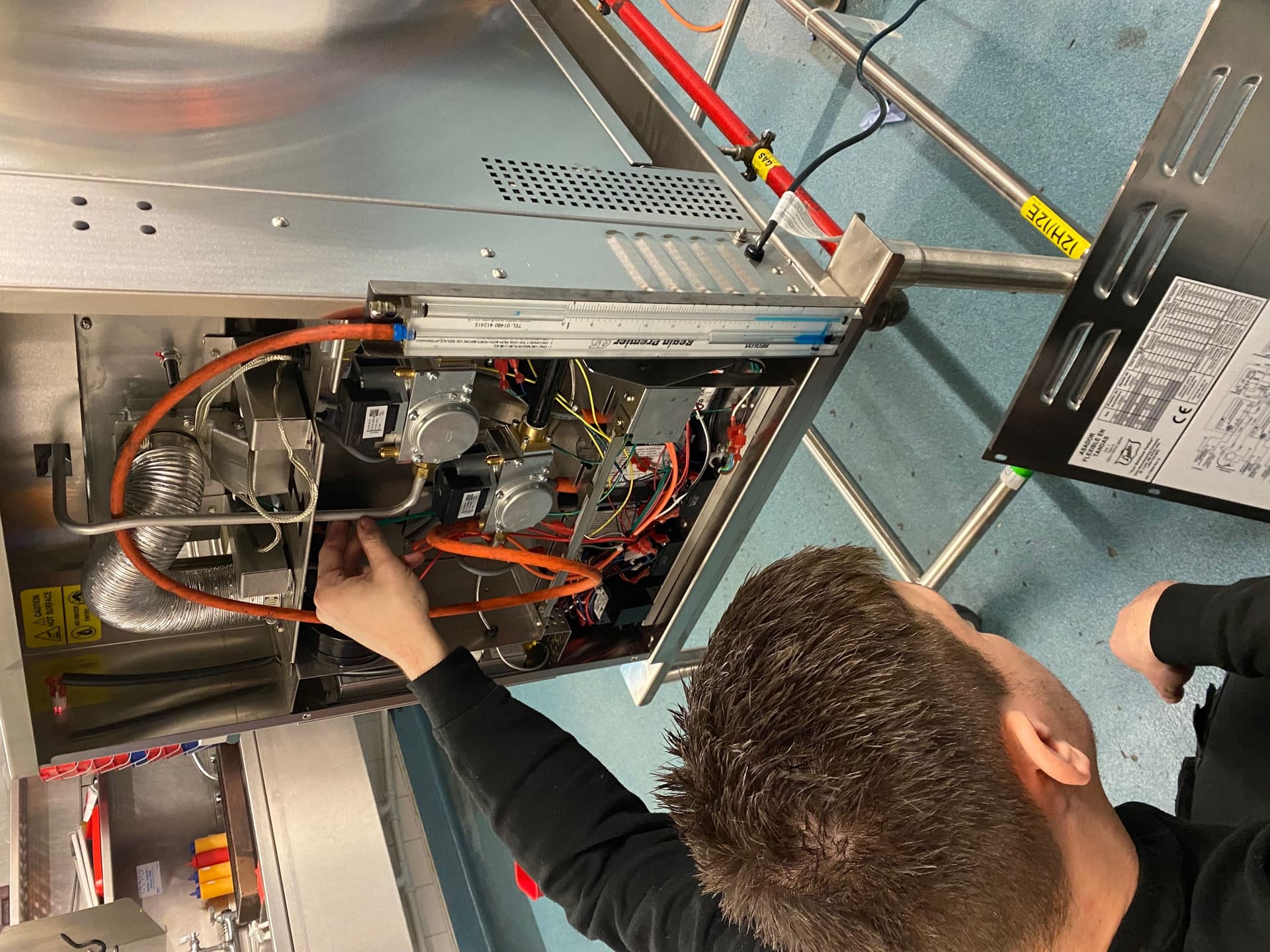
EICR Cost for Commercial Kitchens — 2026 UK Price Guide
Read Article


