

CP42 Gas Safety Certificate: What Commercial Kitchen Operators Need to Know
CP42 Gas Safety Certificate: What Commercial Kitchen Operators Need to Know
If you operate a commercial kitchen in the UK, you are legally required to have your gas appliances inspected and certified on a regular basis. The CP42 certificate — issued following a commercial gas safety inspection — is one of the most important compliance documents your business needs. Yet many operators are unclear about exactly what it covers, who can issue it, and what the consequences of non-compliance are.
This guide covers everything commercial kitchen operators need to know about CP42 gas safety certification.
What Is a CP42 Certificate?
CP42 (formerly known as a Catering Safety Inspection) is the certificate issued following a gas safety inspection of commercial catering equipment. It is the commercial equivalent of the domestic Gas Safety Record (CP12) and is required under the Gas Safety (Installation and Use) Regulations 1998.
The CP42 inspection covers:
- All gas appliances in the commercial kitchen — ovens, grills, fryers, hobs, combis, and associated gas pipework
- Gas supply pressure and flow rates
- Safety device functionality — flame failure devices, thermostats, and pressure regulators
- Burner condition and combustion analysis
- Ventilation adequacy
- Flexible hose condition and connections
- Emergency isolation valve location and operation
Who Needs a CP42 Certificate?
Any business operating gas appliances in a commercial kitchen is required to have a CP42 inspection carried out. This includes:
- Restaurants, cafes, and takeaways
- QSR and fast food chains
- Hotels and conference venues
- Motorway services and roadside food operators
- Airport and transport hub catering facilities
- Staff canteens and corporate catering
- Event catering and temporary kitchen facilities
How Often Must a CP42 Inspection Be Carried Out?
Commercial gas appliances must be inspected at least once every 12 months. For high-use environments — such as QSR chains running appliances for 16+ hours per day — many operators choose to schedule inspections every six months to ensure continued safe operation and to catch wear issues early.
If you take on new premises, you should arrange a CP42 inspection immediately, regardless of when the previous certificate was issued.
Who Can Carry Out a CP42 Inspection?
Only a Gas Safe registered engineer with the correct commercial catering categories can legally carry out a CP42 inspection and issue the certificate. The relevant qualifications include:
- CCCN1 — Core Commercial Catering Gas Safety
- COMCAT 1, 3, and 5 — covering specific appliance types including ovens, fryers, and grills
Always check that any engineer you use is Gas Safe registered and holds the appropriate commercial catering categories before allowing them to work on your equipment. You can verify an engineer's registration at the Gas Safe Register website.
What Happens During a CP42 Inspection?
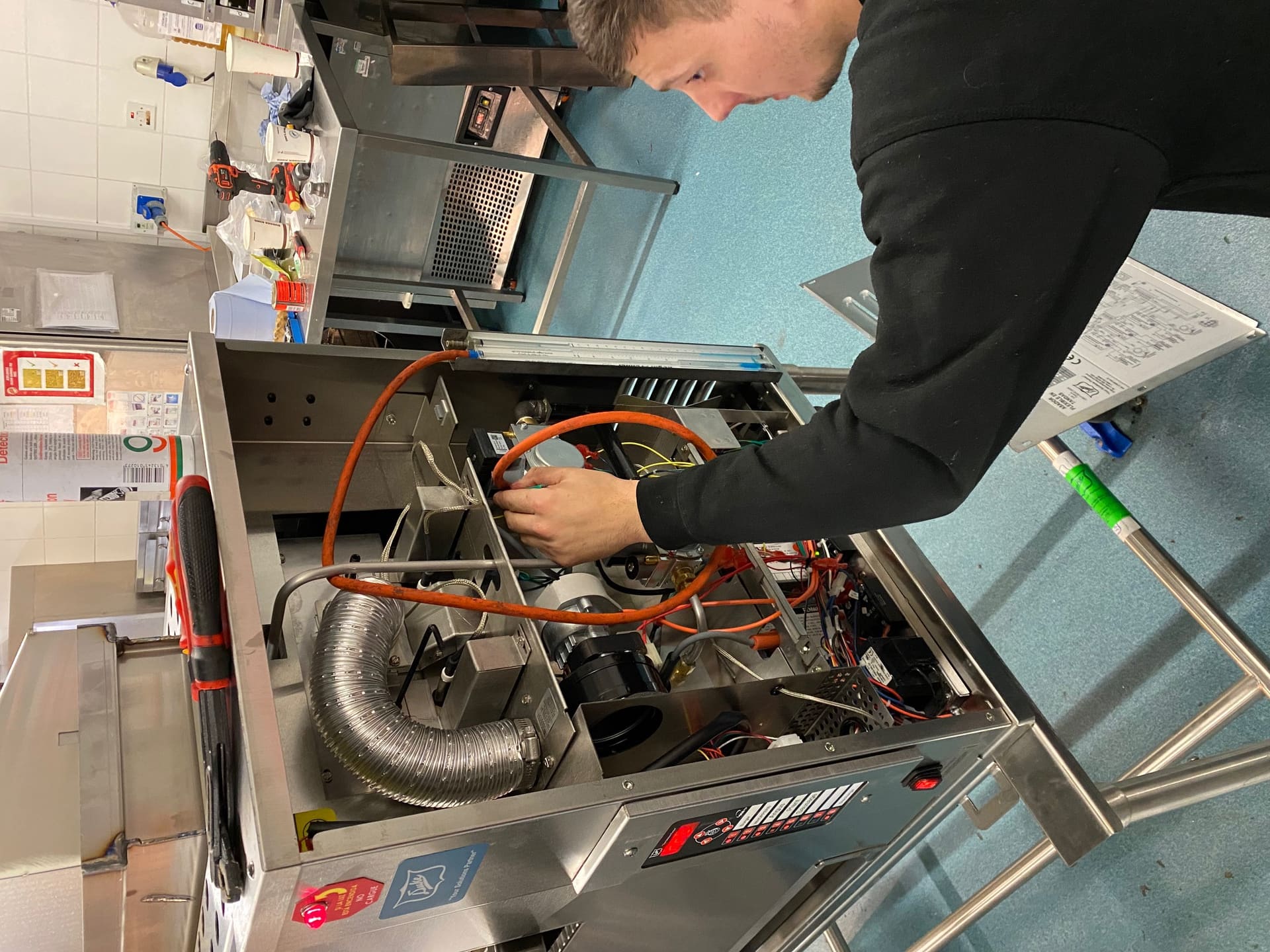
A Gas Safe registered commercial engineer will visit your kitchen and carry out a systematic check of all gas appliances and the associated pipework. The inspection typically takes 1–3 hours depending on the size and complexity of your kitchen.
The engineer will:
- Check gas supply pressure at the meter and at each appliance
- Inspect all flexible connections and rigid pipework for leaks and deterioration
- Test all safety devices including flame failure devices and pressure governors
- Carry out a combustion analysis on gas burners
- Check ventilation meets current requirements for the appliance load
- Inspect and test gas interlock systems if fitted
- Confirm the emergency shut-off valve is accessible and operational
What If My Kitchen Fails the Inspection?
If the engineer identifies an immediately dangerous (ID) fault, they are legally obliged to make the appliance safe — which may mean isolating and disconnecting it on the spot. You will not receive a CP42 certificate until the fault is rectified and the appliance re-inspected.
For at-risk (AR) faults — where the appliance is not immediately dangerous but has a defect that could become dangerous — you will typically have a short window to carry out remedial work before re-inspection.
What Are the Consequences of Not Having a Valid CP42?
Operating commercial gas appliances without a valid CP42 certificate can result in:
- Prosecution under the Gas Safety (Installation and Use) Regulations 1998
- Invalidation of your public liability and buildings insurance
- Enforcement action and closure by the Health and Safety Executive (HSE)
- Personal liability in the event of an accident or injury
- Failure of food hygiene inspections where gas safety is reviewed
Gas Interlock Systems and CP42
Many commercial kitchens are now required to have a gas interlock system fitted as part of their ventilation and gas safety setup. A gas interlock system automatically shuts off the gas supply if the ventilation fails or is switched off, preventing dangerous gas build-up. During a CP42 inspection, the engineer will check the interlock system is operational and correctly interlocked with the ventilation.
If your kitchen does not have a gas interlock system, the engineer may flag this as a requirement depending on your building regulations and kitchen setup.
Book Your CP42 Inspection with HK Engineering
HK Engineering's Gas Safe registered engineers hold the full range of commercial catering qualifications including CCCN1 and COMCAT 1, 3, and 5. We carry out CP42 gas safety inspections across England and Wales for QSR chains, restaurants, hotels, airports, and motorway services.
We provide a clear, detailed CP42 certificate following every inspection and can carry out any required remedial work to ensure your kitchen is compliant. Contact our team to arrange an inspection or discuss a planned maintenance contract that includes annual gas safety certification.
Related Articles
How Much Does a CP42 Commercial Gas Safety Certificate Cost in 2026?
Read Article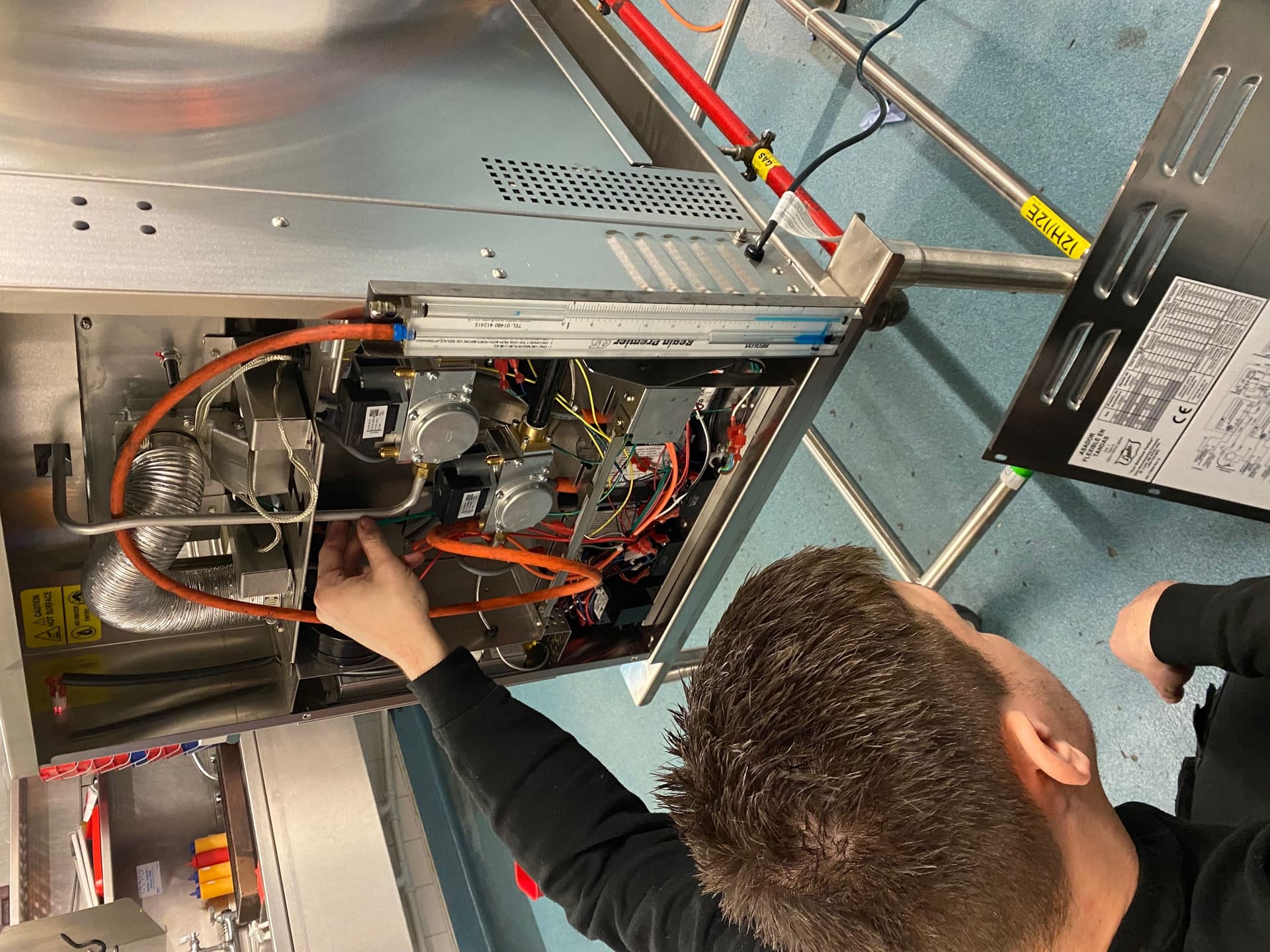
EICR Cost for Commercial Kitchens — 2026 UK Price Guide
Read Article


